


The 5-Minute Nervous System Reset: Simple Regulation Tools You Can Use Anywhere

You know that moment when your heart's racing before a meeting, or your thoughts are spiraling in the grocery store parking lot, or you're sitting at your desk feeling completely flooded, and someone tells you to "just relax"?
Yeah. That doesn't help.
What does help is having a few simple, body-based tools you can reach for when your nervous system is firing on all cylinders and you need to come back to yourself. Not someday, not after a yoga retreat, right now.
This isn't about achieving perfect calm or meditating your way out of stress. It's about giving your body a few small signals that say, "Hey, I'm here. We're okay. Let's reset."
Here are five nervous system regulation tools you can use anywhere, in your car, at work, in the bathroom, in line at H-E-B. No apps. No equipment. Just you and a few minutes.
1. The Longer Exhale (Box Breathing's Easier Cousin)
If you've ever tried box breathing and felt like you were holding your breath too long or getting dizzy, this one's for you.
The idea: your exhale activates your parasympathetic nervous system, the part that helps you rest, digest, and settle. A longer exhale tells your body, "We're not running from anything right now."
How to do it:
Breathe in through your nose for a count of 3 or 4.
Breathe out through your mouth (or nose, whatever feels better) for a count of 5, 6, or 7.
Repeat 5–6 times, or until you notice a shift.
You're not trying to force anything. If you feel lightheaded or panicky, shorten the counts or take a break. This is about support, not control.
You can do this at a stoplight, before you walk into a room, or while your coffee brews. It's quick. It's quiet. And it works.
2. Orienting: Look Around the Room
This one sounds almost too simple, but it's one of the fastest ways to pull yourself out of a thought spiral and back into the present.
When you're anxious or overwhelmed, your focus narrows. Your brain is scanning for threats, and everything feels urgent. Orienting interrupts that.
How to do it:
Without moving your head too much, slowly look around the space you're in.
Let your eyes land on different objects, a plant, a doorframe, the corner of a table.
Notice colors, shapes, textures.
You're not analyzing. You're just seeing.
This tells your nervous system, "I'm here. I'm noticing my surroundings. I'm safe enough to take in information."
It's grounding without forcing yourself to "feel grounded." You're just letting your brain do what it does naturally when it's not stuck in fight-or-flight.
3. Feet on the Floor (Literal Grounding)
If you're sitting down, this one takes about 30 seconds.
How to do it:
Plant both feet flat on the floor.
Press down gently, like you're pushing into the ground.
Notice the pressure. Notice the contact.
If it helps, wiggle your toes or roll your feet side to side.
If you're standing, shift your weight from foot to foot. Rock slightly forward and back. Feel the ground underneath you.
This isn't metaphorical grounding, it's physical grounding. You're reminding your body that you're supported, that gravity's got you, that you're not falling.
It's subtle. But when your thoughts are loud and your chest is tight, subtle helps.
4. The Wall Push (When You Need to Move Energy)
Sometimes your nervous system isn't looking for calm, it's looking for release. If you feel jittery, restless, or like you want to crawl out of your skin, this one helps.
How to do it:
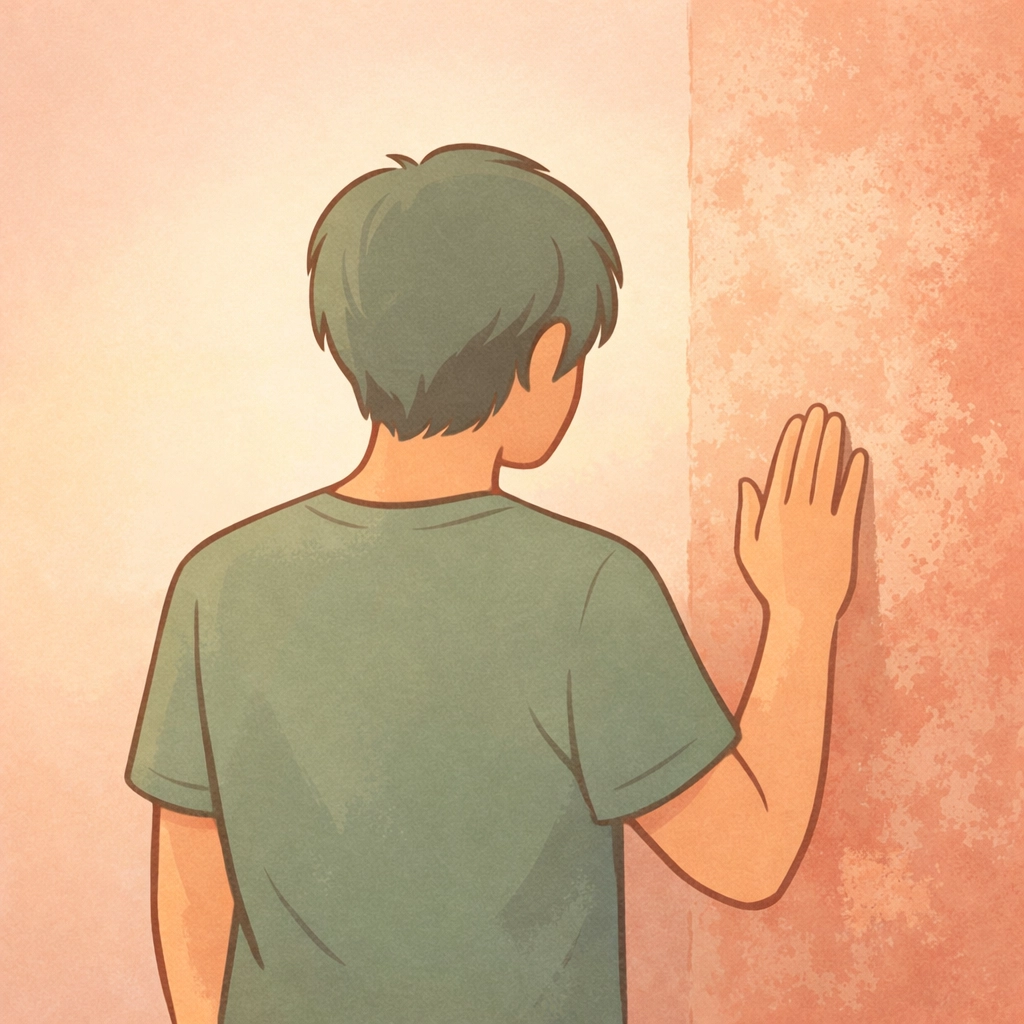
Stand facing a wall, about an arm's length away.
Place both palms flat against the wall at shoulder height.
Push into the wall like you're trying to move it. Use real effort.
Hold for 10–15 seconds, then release.
Repeat 2–3 times.
You're not actually trying to push the wall down, you're giving your muscles something to do with all that activation. It's a way to say, "Okay, body, I hear you. Let's use this energy."
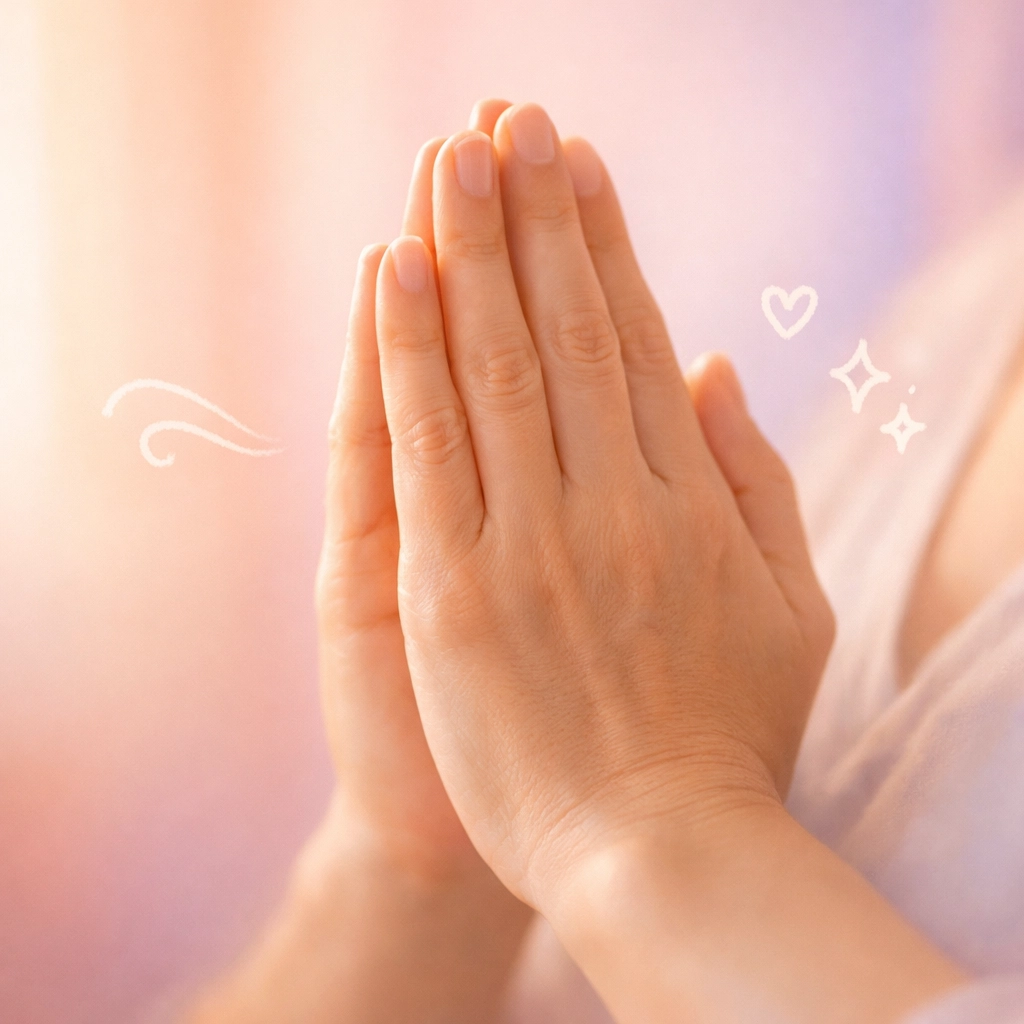
If a wall's not available, you can press your palms together in front of your chest, or push your hands into your thighs while sitting. Same idea.
5. Cold Water Reset (The Instant Interrupt)
This one's fast, a little uncomfortable, and surprisingly effective.
Cold activates your vagus nerve: the main nerve that helps regulate your nervous system. It's like hitting a gentle reset button.
How to do it:
Splash cold water on your face, especially around your eyes and temples.
Hold a cold water bottle or ice pack against the back of your neck or your wrists.
Run cold water over your hands for 30 seconds.
If you're at home, you can even dunk your face in a bowl of ice water for 10–15 seconds (this is called the "dive reflex," and it's wild how quickly it shifts things).
A quick note: If cold feels triggering or makes your anxiety spike, skip this one. Not every tool works for every nervous system, and that's okay.
6. Bilateral Tapping (Soothing Through Rhythm)
This one's gentle, repetitive, and calming: especially if you're feeling floaty, disconnected, or shutdown.
How to do it:
Cross your arms over your chest (like you're giving yourself a hug).
Tap your hands on your shoulders, alternating left-right-left-right, at a slow, steady rhythm.
Keep going for 1–2 minutes, or until you feel a shift.
You can also tap your hands on your thighs, or even tap your feet on the ground in an alternating rhythm. The point is the bilateral stimulation: engaging both sides of your body, creating rhythm, creating safety.
It's the kind of thing you might do instinctively when you're stressed and don't even realize it. Now you're just doing it on purpose.
A Few Things to Keep in Mind
These tools aren't magic. They won't erase stress or "fix" your nervous system. What they will do is give you a way to work with your body instead of against it.
Some days, a longer exhale will settle you in 90 seconds. Other days, you'll need to try a few things before something clicks. That's normal.
If something makes you feel worse: dizzy, panicky, numb, disconnected: stop. Regulation tools should feel supportive, not forceful. If a technique consistently doesn't help, that's information. Not failure.
And if you're noticing that your nervous system feels stuck, or like you can't settle no matter what you try, that might be a sign it's time to work with someone who can help you build regulation in a deeper, more supported way.
You Don't Have to Do This Alone
If you're in the Rio Grande Valley: McAllen, Edinburg, Pharr, or anywhere nearby: and you're realizing that you need more than a 5-minute reset, we'd love to support you.
At Sage Healing Counseling Services, we work with folks who are tired of white-knuckling their way through stress and want to build a healthier, more sustainable relationship with their nervous system. We offer therapy in-person and virtually, and we get it: this work takes time, patience, and someone who actually understands what you're carrying.
You can learn more about our services here, or reach out whenever you're ready.
Start Small
Pick one tool from this list. Just one.
Try it tomorrow morning, or the next time you feel your chest tighten, or before bed tonight.
Notice what happens. Notice what shifts. Notice what your body's telling you.
You're not trying to become a regulation expert overnight. You're just learning to listen: and to respond: a little differently than you did before.
That's enough.


Comments